Travelling via Germany? Indians no longer need a transit visa
The move, effective June 3, is expected to simplify international travel for Indian passengers using German airports as transit points while reflecting closer bilateral ties.
Statesman News Service | New Delhi | June 2, 2026 6:47 pm
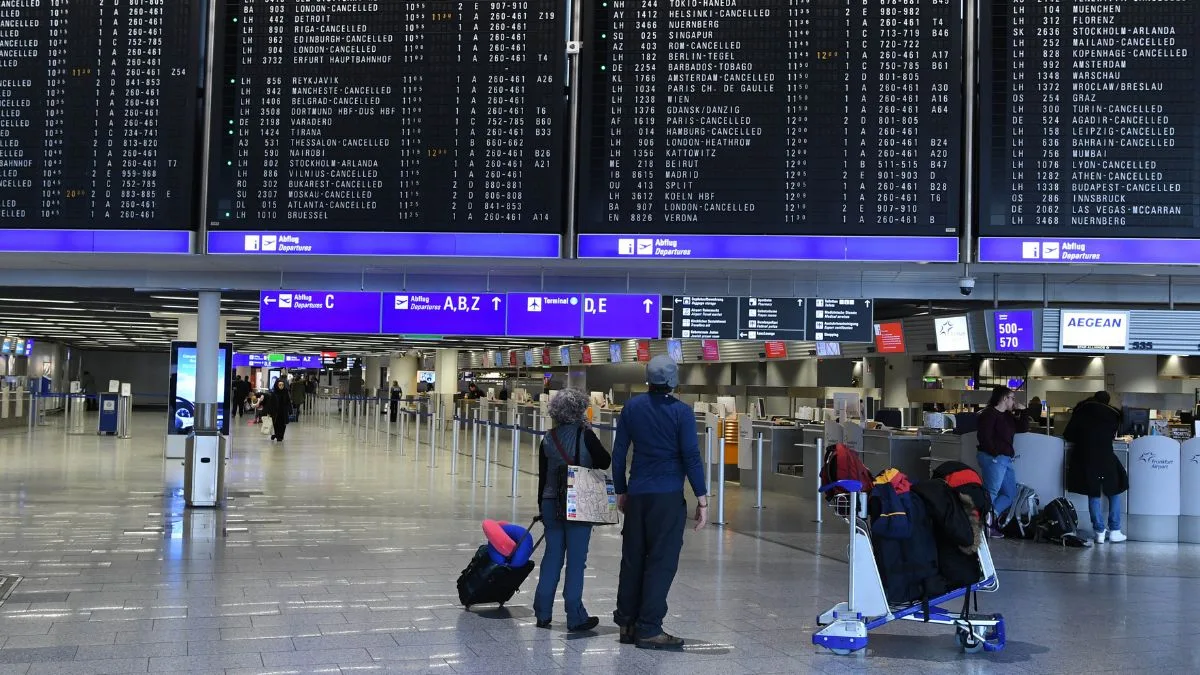
Passengers at Frankfurt Airport in Germany. Indian nationals travelling onward to a third country through German airports will no longer require an airport transit visa from June 3, 2026. (Xinhua via IANS)
Indian nationals travelling onward to a third country through Germany will no longer need an airport transit visa, in a move that is expected to make international travel smoother and more convenient for thousands of passengers using German airports as transit hubs.
The exemption, announced by the German Embassy in New Delhi on Tuesday, takes effect from June 3 and marks a significant easing of travel rules for Indian passport holders. The development is also being seen as part of a broader push by Berlin and New Delhi to deepen economic, strategic and people-to-people ties.
Advertisement
According to the embassy, the removal of the airport transit visa requirement was formally published in Germany’s Federal Law Gazette on June 2.
Advertisement
“The lifting of the so-called airport transit visa requirement for Indian citizens was announced in the Federal Law Gazette (Bundesgesetzblatt) on June 2, 2026, and takes effect on June 3, 2026,” the embassy said in a statement.
The mission linked the decision to German Chancellor Friedrich Merz’s visit to India earlier this year.
“This implements a result of Federal Chancellor Friedrich Merz’s trip to India in January of this year. It underlines the Federal Government’s commitment to deepening German Indian relations, facilitating the movement of people, and further strengthening economic ties,” the statement added.
Visa relaxation follows growing India-Germany engagement
The announcement comes against the backdrop of expanding cooperation between the two countries across trade, technology, defence, healthcare and clean energy.
During Chancellor Merz’s visit, Prime Minister Narendra Modi and the German leader noted the continued rise in bilateral trade and investment. Both sides observed that trade between the two countries had touched a record high in 2024 and maintained momentum through 2025.
According to the Ministry of External Affairs, India and Germany concluded 19 agreements during the visit and made several policy announcements aimed at strengthening cooperation across strategic, economic and people-centric sectors.
Focus on connectivity, defence and economic cooperation
The two leaders had also reiterated support for the India-Middle East-Europe Economic Corridor (IMEC), describing it as a transformative initiative with the potential to boost connectivity, trade and economic growth across regions.
They also expressed hope that the first ministerial meeting of IMEC would help advance the project through concrete measures.
In the defence sector, both countries welcomed the signing of a Joint Declaration of Intent to develop a Defence Industrial Cooperation Roadmap.
According to a joint statement issued after the visit, the roadmap aims to encourage long-term collaboration between industries in both countries through technology partnerships, co-development and co-production of defence platforms and equipment. India also welcomed Germany’s efforts to speed up export clearances for defence-related supplies.
Union Minister for Commerce and Industry Piyush Goyal said Friday that the government held a series of high-level bilateral meetings with representatives from Chile, Oman, the Netherlands, the Maldives, Germany and Egypt to deepen trade, investment and strategic cooperation.
Defence Minister Rajnath Singh visited the TKMS submarine building facility in Kiel, Germany, during his ongoing official visit, where he was briefed on advanced Naval technologies and capabilities.
Rajnath Singh highlights India’s neutral global stance, strong Germany ties and growing economic partnership, while pointing to diplomatic engagement across major world conflicts.